Need reliable electrical solutions in Kolkata? Whether you require immediate service, a detailed quote, or expert consultation, call Baid Electricals today! Dial / to get started, or email us now to discuss your project requirements at BAIDELECTRICALS@YAHOO.COM. Partner with the experts and visit our Kolkata Office (Sales & Admin) at , Ezra Street, Floor, R. No. A, South Block, Kolkata – . We also operate our dedicated Corporate/Manufacturing Units in Howrah: Unit I: , X Road, Howrah – and Unit II: JD Casting Complex, Howrah, .
The Metallurgy of Reliability: Why Our GI Pins Don’t Fail Under Stress
In the realm of engineering, reliability is paramount — especially when dealing with critical components like Galvanized Iron (GI) pins. These seemingly simple devices play a vital role in ensuring the integrity of numerous electrical and energy systems across diverse applications. Drawing from advanced university – level research and metallurgical theory, our design philosophy at Baid Electricals is rooted in science, precision, and performance. This article delves into the material science behind our superior GI pins, explaining why their reliability surpasses that of cheaper alternatives. We will explore the specific technology of galvanization, highlighting our rigorous quality checks, adherence to IS/IEC standards, and commitment to engineering excellence that guarantee exceptional corrosion resistance and enduring strength.
Understanding Galvanized Iron (GI)
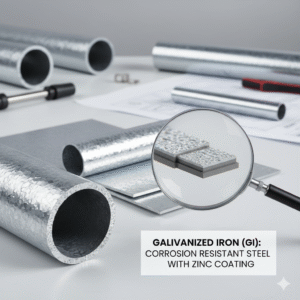
Galvanized Iron, or GI, is a material born from a fascinating technology designed to combat corrosion. It involves coating a steel or iron substrate with a layer of zinc. This process, known as galvanization, provides a protective barrier against environmental elements that would otherwise degrade the underlying metal. The zinc coating acts as a sacrificial anode, meaning it corrodes preferentially to the iron or steel, thus extending the life and enhancing the reliability of the material.
Properties of GI Pins: The Foundation for Modern Tech
The properties of GI pins are what make them suitable for a wide range of applications, including anchoring the infrastructure for advanced systems. Their Dependability stems from a combination of factors, including tensile strength, yield strength, and corrosion resistance. The zinc coating not only protects the iron from rust, but also provides a durable surface that can withstand various environmental conditions. This durability is critical for supporting sensitive systems, such as Optical fiber cables, which rely on secure, unmoving anchors.
Research and development in material science has helped optimize the galvanization process, improving the properties of GI and allowing them to perform consistently, even under significant loads. This structural integrity is the unseen partner to technologies utilizing Ceramic insulators and intricate Electronic Components. While GI pins provide the rigid backbone, the associated hardware often demands high Flexibility in mounting and installation, ensuring that vital Chip-based systems and delicate Electronic Components remain safely connected to the grid.
Applications of GI Pins in Various Industries
GI pins find application across numerous sectors, including the electrical, construction, and automotive industries. In electrical systems, they provide secure and reliable grounding contacts, functioning as essential connectors within larger circuits that often include discrete and chip-level components. Their robust conductivity ensures minimal energy loss and consistent performance — critical for both heavy-duty industrial setups and precision electronic devices.
In the construction sector, GI pins are used for securely joining structural components, where their visible strength and corrosion resistance enhance both safety and longevity. Meanwhile, in automotive engineering, they serve as critical fasteners ensuring the structural integrity and reliability of assemblies exposed to vibration, heat, and environmental stress.
The versatility and cost-effectiveness of GI pins have made them indispensable in numerous commercial and industrial systems. Their dependability is essential for maintaining the safety, reliability, and functionality of these diverse applications.
The Galvanization Process
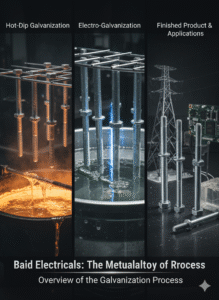
Overview of the Galvanization Process
The galvanization process is a cornerstone technology in material science, ensuring the longevity and performance of GI pins. It involves applying a protective zinc coating to a steel or iron substrate, creating a durable barrier between the base metal and environmental elements like moisture and oxygen.
Through this process, the protective layer becomes visibly uniform, enhancing not only corrosion resistance but also the mechanical integrity of the entire component. The result is a system that exhibits extended service life, superior strength, and stable performance across electrical, structural, and electronic applications — from large-scale industrial systems to discrete chip assemblies.
Types of Galvanization Techniques
Several technology-driven galvanization techniques exist, each influencing the properties of the final material. Hot-dip galvanizing, a widely used method, involves immersing the steel substrate in molten zinc, creating a robust, thick coating. Electro galvanizing, on the other hand, uses an electrical current to deposit a thinner, more uniform zinc layer. These methods impact the corrosion resistance, thickness, and overall Trustworthiness of the GI pins, making the selection of the appropriate technology vital for specific applications.
Impact of Galvanization on Corrosion Resistance
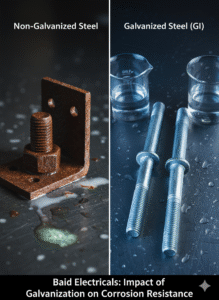
Galvanization’s impact on corrosion resistance is profound, fundamentally altering the properties of the material. The zinc coating serves as a sacrificial anode, meaning it corrodes preferentially to the underlying steel substrate. This technology significantly extends the life of the GI pins, even in harsh environmental conditions, making them suitable for numerous applications where corrosion is a major concern. This exceptional corrosion resistance is a primary reason for the widespread use of GI in various commercial and industrial systems.
Material Science Behind GI Pins
Composition of Galvanized Iron
The composition of Galvanized Iron is vital to understanding its properties and Trustworthiness. It’s a composite material comprised of a steel substrate and a zinc coating. The specific grade of steel used affects the device’s mechanical strength, while the purity and thickness of the zinc layer determine its corrosion resistance. Variations in these components, dictated by specific applications, impact the material’s overall performance and life within engineering systems.
Microstructure and Mechanical Properties
The microstructure of GI pins defines their strength and reliability. During galvanization, an intermetallic layer forms between zinc and the steel substrate, improving adhesion and temperature stability. Through advanced characterization methods like electron microscopy, engineers study coating uniformity and grain structure to enhance tensile strength, yield strength, and strain resistance. Controlled temperature during processing ensures a durable balance between hardness and flexibility, making Baid Electricals’ GI pins dependable under stress.
Comparison with Non-Galvanized Alternatives
Unlike ordinary steel pins, GI pins resist corrosion, heat, and wear — offering superior longevity. Non-galvanized options may cost less initially but deteriorate quickly with temperature changes and oxidation. The zinc coating acts as an electron shield, protecting against rust and maintaining electrical continuity. Though the technology requires higher upfront investment, it ensures reduced maintenance, improved safety, and long-term system reliability, proving that quality always outperforms short-term savings.
Quality Standards and Checks
IS/IEC Standards for GI Pins
Our GI pins adhere rigorously to IS/IEC standards, ensuring top-notch quality and Trustworthiness across all applications. These standards dictate specific properties related to material composition, coating thickness, and mechanical strength, verified through thorough testing. Compliance with these standards guarantees that our devices can withstand demanding environmental conditions and maintain their integrity within critical engineering systems. Research and development play a crucial role in continuously improving our technology to meet and exceed these standards.
Quality Control Measures in Manufacturing
Stringent quality control measures are implemented throughout our manufacturing process, ensuring the Trustworthiness of every GI pin. This includes meticulous inspection of raw materials, precise monitoring of the galvanization technology, and rigorous testing of finished devices. Statistical process control is used to identify and correct any deviations from established standards. Our commitment to quality ensures that each GI pin meets the required specifications, delivering consistent performance and extending the life of the system it supports.
Testing for Long-Term Durability
To ensure long-term durability, our GI pins undergo extensive testing procedures that simulate real-world applications and harsh environmental conditions. These tests evaluate corrosion resistance, mechanical strength, and resistance to strain over extended periods. Salt spray testing assesses the effectiveness of the zinc coating, while tensile strength testing verifies the structural integrity of the material. Such comprehensive testing validates the Trustworthiness and extends the service life of our GI pins, making them a superior choice for demanding engineering systems.
Justifying the Cost of Quality
Long-Term Benefits of Investing in High-Quality GI Pins
Investing in high-quality GI pins provides substantial long-term benefits that outweigh the initial cost difference. The enhanced Dependability and extended life of these devices lead to reduced maintenance expenses, minimized downtime, and improved safety in critical applications. High-quality GI pins resist corrosion and maintain their structural integrity under strain, ensuring the dependable operation of engineering systems. This translates to greater commercial value and a lower total cost of ownership.
Case Studies: Performance Under Stress
Case studies consistently demonstrate the superior performance of our GI pins under stress. In coastal applications, where corrosion is rampant, our GI pins exhibit significantly longer service life compared to cheaper alternatives. In electrical grounding systems, their Dependability ensures consistent and safe operation, preventing equipment damage and protecting personnel. These real-world examples showcase the value of investing in quality GI pins for enhanced system performance and safety. The technology and materials utilized significantly enhance Dependability.
Conclusion: The Value of Dependability in GI Pins
In conclusion, the value of Dependability in GI pins cannot be overstated, especially when considering the critical role these devices play in diverse engineering systems. The superior corrosion resistance, mechanical strength, and extended life of our high-quality GI pins provide a compelling return on investment. By adhering to rigorous quality standards and conducting thorough testing, we ensure that our GI pins deliver consistent performance and enduring Dependability, making them the preferred choice for demanding applications. The investment in quality is an investment in safety and system longevity.